
In today’s digital world, your online reputation can influence nearly every aspect of your personal or professional life. Before hiring a company, purchasing a product, or working with an individual, many people search online to learn more. What they find in search engines, review platforms, news articles, social media, and business directories often shapes their first impression.
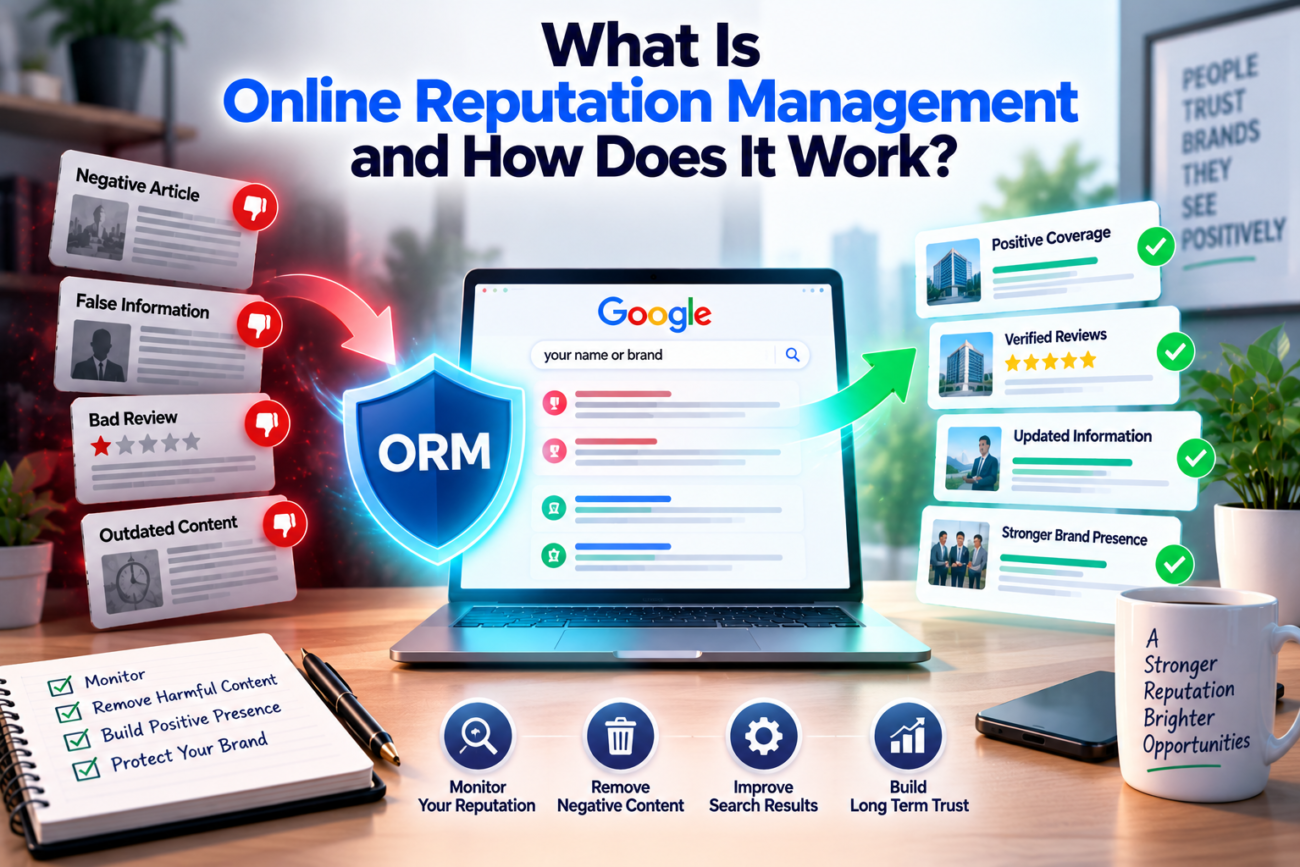
This is where Online Reputation Management (ORM) becomes important. Online Reputation Management is the process of monitoring, improving, and protecting how a person, business, or brand appears across the internet. It involves more than simply responding to negative comments. It focuses on building trust, promoting accurate information, and maintaining a positive digital presence over time.
This guide explains what Online Reputation Management is, how it works, why it matters, and the strategies businesses and individuals use to build a strong online reputation.
What Is Online Reputation Management?
Online Reputation Management (ORM) is the practice of managing the information people see about you or your business online.
ORM includes activities such as:
- Monitoring search results
- Managing online reviews
- Publishing positive content
- Responding to customer feedback
- Correcting inaccurate information
- Building brand authority
- Protecting personal or business reputation
The goal is to ensure that online information accurately reflects your reputation while minimizing the impact of outdated, misleading, or harmful content.
Why Online Reputation Matters
Most consumers and business decision-makers research companies before making purchasing decisions.
A strong online reputation can help:
- Increase customer trust
- Improve brand credibility
- Generate more leads
- Support sales growth
- Attract investors
- Strengthen business relationships
- Improve customer loyalty
For individuals, a positive online reputation can influence career opportunities, professional networking, and personal credibility.
How Online Reputation Management Works
ORM is an ongoing process rather than a one-time task.
The process generally includes several key steps.
Monitoring Your Online Presence
The first step is understanding what people see when they search for your name or business.
Common areas to monitor include:
- Google Search results
- News articles
- Review websites
- Social media platforms
- Business directories
- Blogs
- Forums
- Video platforms
Regular monitoring helps identify potential issues before they grow.
Identifying Reputation Risks
After monitoring your online presence, evaluate any content that may affect your reputation.
Examples include:
- Negative reviews
- Outdated articles
- Incorrect information
- Customer complaints
- Negative news coverage
- Fake profiles
- Unauthorized content
Not every negative result requires removal. Sometimes a thoughtful response is the better solution.
Creating Positive Content
Publishing valuable content helps build authority and strengthen your digital presence.
Examples include:
- Blog articles
- Press releases
- Customer success stories
- Industry research
- Educational resources
- Videos
- Podcasts
- Professional biographies
High-quality content provides search engines with additional trusted information about your brand.
Managing Online Reviews
Customer reviews significantly influence purchasing decisions.
Good review management includes:
- Responding professionally
- Thanking satisfied customers
- Addressing concerns respectfully
- Resolving legitimate complaints
- Encouraging honest customer feedback
Professional communication demonstrates accountability and customer care.
Search Engine Reputation Management
Search engines often shape the first impression people have of a business.
ORM strategies may include:
- Improving positive content visibility
- Updating outdated webpages
- Removing duplicate content
- Optimizing business profiles
- Building authoritative content
The objective is to ensure that search results accurately represent the business.
Social Media Management
Social media platforms play a major role in reputation.
Best practices include:
- Publishing useful content
- Responding to customer questions
- Maintaining consistent branding
- Addressing concerns professionally
- Sharing company updates
Active engagement helps strengthen customer relationships.
Who Needs Online Reputation Management?
ORM benefits organizations and individuals of all sizes.
Examples include:
- Small businesses
- Large corporations
- Startups
- Professionals
- Executives
- Healthcare providers
- Lawyers
- Real estate agents
- Public figures
- E-commerce businesses
Anyone with a public online presence can benefit from reputation management.
Benefits of Online Reputation Management
An effective ORM strategy can provide long-term advantages.
Benefits include:
- Stronger brand credibility
- Greater customer confidence
- Better search visibility
- Higher customer retention
- Increased referral business
- Improved media perception
- Better crisis preparedness
- More positive online engagement
A positive reputation often becomes a competitive advantage.
Common ORM Strategies
Businesses commonly use multiple strategies together.
These include:
- Publishing authoritative content
- Managing customer reviews
- Monitoring brand mentions
- Updating inaccurate information
- Optimizing business profiles
- Earning positive media coverage
- Improving customer service
- Creating educational resources
Consistency is essential for long-term success.
Online Reputation Management During a Crisis
Every business may eventually face criticism or negative publicity.
During challenging situations:
- Respond promptly.
- Remain professional.
- Acknowledge legitimate concerns.
- Provide accurate information.
- Communicate transparently.
- Avoid emotional reactions.
A calm and honest response often helps maintain public trust.
Mistakes to Avoid
Some actions can damage your reputation further.
Avoid:
- Ignoring customer feedback
- Posting misleading information
- Buying fake reviews
- Arguing publicly
- Deleting legitimate criticism
- Making promises you cannot keep
- Using unethical reputation tactics
Authenticity is one of the most valuable assets in reputation management.
Measuring ORM Success
Success should be measured using multiple indicators rather than a single metric.
Useful measurements include:
- Review ratings
- Customer satisfaction
- Search result quality
- Brand mentions
- Website traffic
- Social engagement
- Customer retention
- Lead generation
Monitoring progress helps refine future strategies.
The Future of Online Reputation Management
Online reputation continues to evolve alongside technology.
Emerging trends include:
- AI-powered search experiences
- Voice search optimization
- Greater emphasis on trusted sources
- Increased importance of authentic customer reviews
- Advanced sentiment analysis
- Real-time brand monitoring
- Stronger focus on privacy
Businesses that adapt to these trends will be better positioned to maintain credibility in the digital landscape.
Final Thoughts
Online Reputation Management is about much more than addressing negative reviews or responding to criticism. It is a long-term strategy for building trust, maintaining credibility, and ensuring that the information people find online accurately reflects your personal or professional identity. By consistently monitoring your online presence, publishing valuable content, engaging with customers, and responding professionally to feedback, you can create a strong reputation that supports long-term success.
Whether you are an entrepreneur, a growing business, or an established organization, investing in Online Reputation Management helps strengthen your digital presence and build lasting confidence among customers, partners, and stakeholders.
Frequently Asked Questions (FAQs)
1. What is Online Reputation Management (ORM)?
Online Reputation Management is the process of monitoring, improving, and protecting how a person, business, or brand is represented across search engines, review platforms, social media, news websites, and other online channels.
2. Why is Online Reputation Management important?
A positive online reputation builds trust, improves credibility, attracts customers, strengthens professional relationships, and supports long-term business growth.
3. What does ORM include?
ORM typically includes monitoring search results, managing reviews, publishing positive content, responding to customer feedback, correcting inaccurate information, and strengthening online visibility.
4. Can ORM remove negative search results?
In some situations, inaccurate or policy-violating content may be removed. However, ORM often focuses on improving the overall online presence rather than removing every negative result.
5. How long does Online Reputation Management take?
ORM is an ongoing process. Some improvements may become visible within a few weeks, while building a strong online reputation often takes several months of consistent effort.
6. Who should use Online Reputation Management?
Businesses of all sizes, professionals, executives, entrepreneurs, healthcare providers, law firms, public figures, and individuals with a public online presence can benefit from ORM.
7. Does Online Reputation Management improve SEO?
While ORM and SEO are different disciplines, creating high-quality content, improving business profiles, and building authority can support stronger visibility in search results.
8. Can fake reviews affect online reputation?
Yes. Fake or misleading reviews can influence public perception. Businesses should respond professionally and report reviews that violate platform policies when appropriate.
9. How can businesses maintain a positive online reputation?
Businesses can maintain a positive reputation by delivering excellent customer service, responding to feedback professionally, publishing valuable content, monitoring brand mentions, and communicating transparently.
10. What is the most important part of Online Reputation Management?
The most important element is consistency. Regular monitoring, honest communication, valuable content, and genuine customer engagement help build a trustworthy reputation that supports long-term success.
